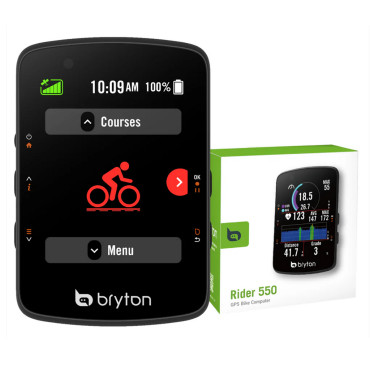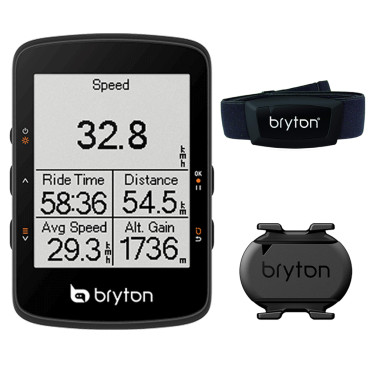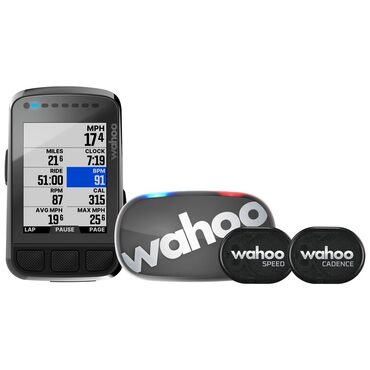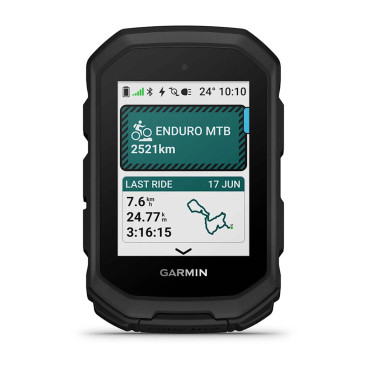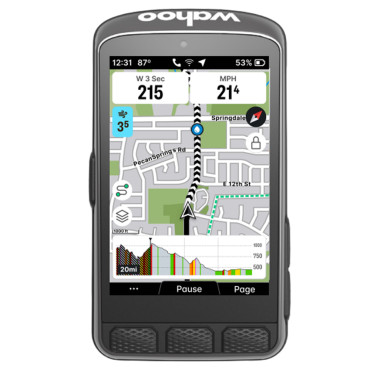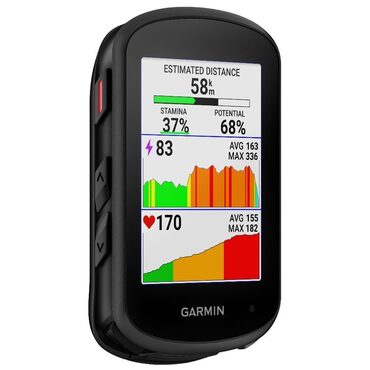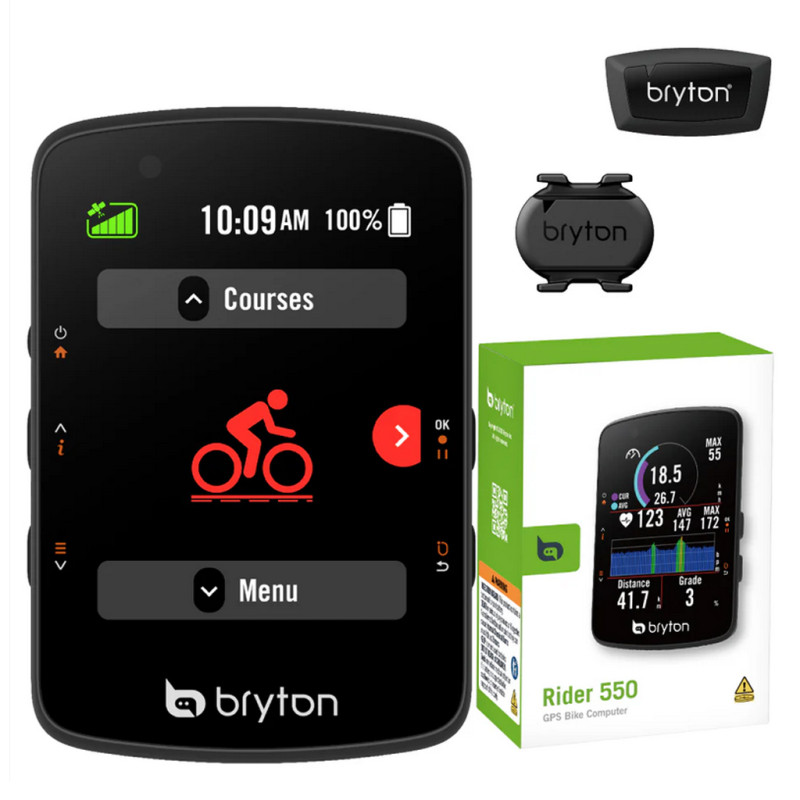
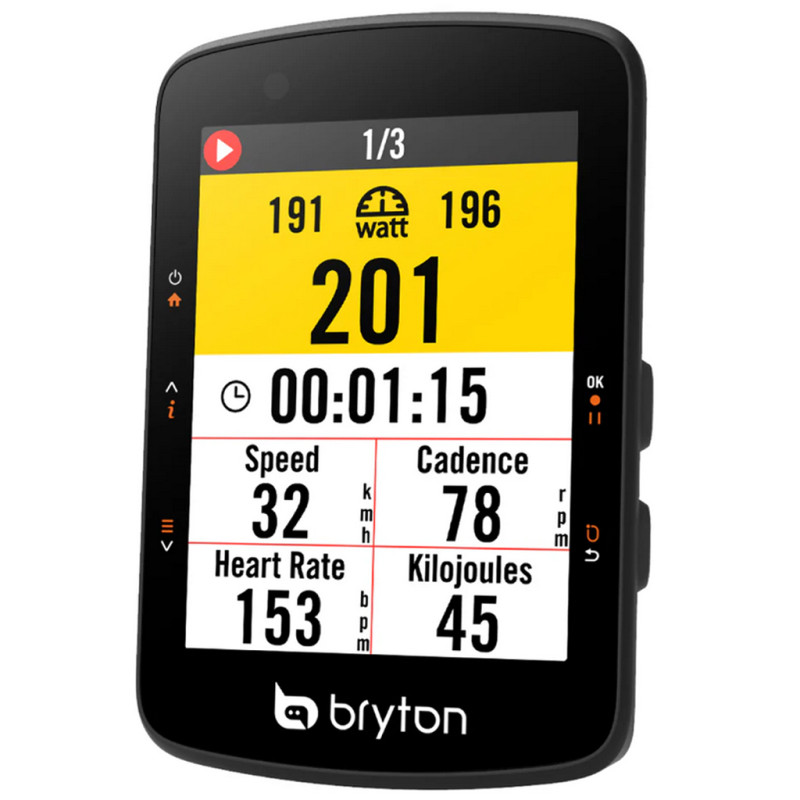


The Bryton Rider 550 D is for cyclists who want a GPS bike computer with a user-friendly interface and want to improve with the best possible tracking. This version comes with all the sensors for more accurate data.
Technology specialist
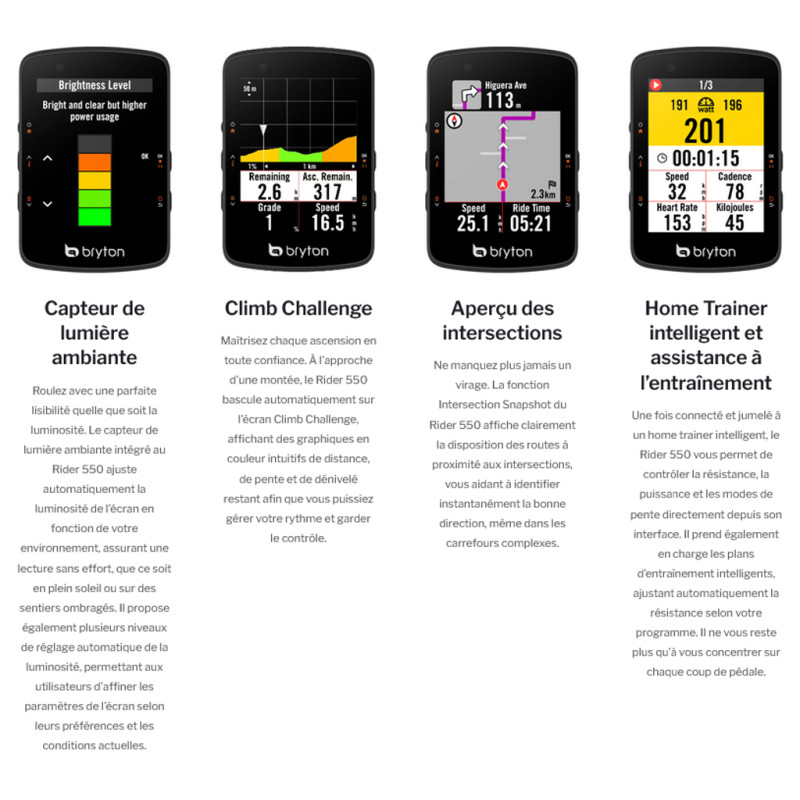
Positioned between the Rider 460 and the Rider 650 in Bryton’s mid-range, the Rider 550 D offers advanced features and intuitive operation. Designed for cyclists seeking efficiency and performance, this GPS features a crisp, easy-to-read 2.8-inch colour screen for effortless viewing of all your data. Although not touchscreen, this display features an ambient light sensor for automatic adjustment to ambient light conditions.
In addition to its rich graphical interface and a battery life of 37 hours, the Bryton Rider 550 D offers essential performance tools such as advanced training features, reliable navigation and the Climb Challenge. This advanced version comes with speed and cadence sensors for greater accuracy. With the Bryton Rider 550 D, you’ll have everything you need to continue improving your cycling performance.
- Dimensions: 84.5 x 56.8 x 16 mm
- 2.8-inch colour screen, TFT LCD, non-touch
- Battery life: 37 hours
- Weight: 86 grams
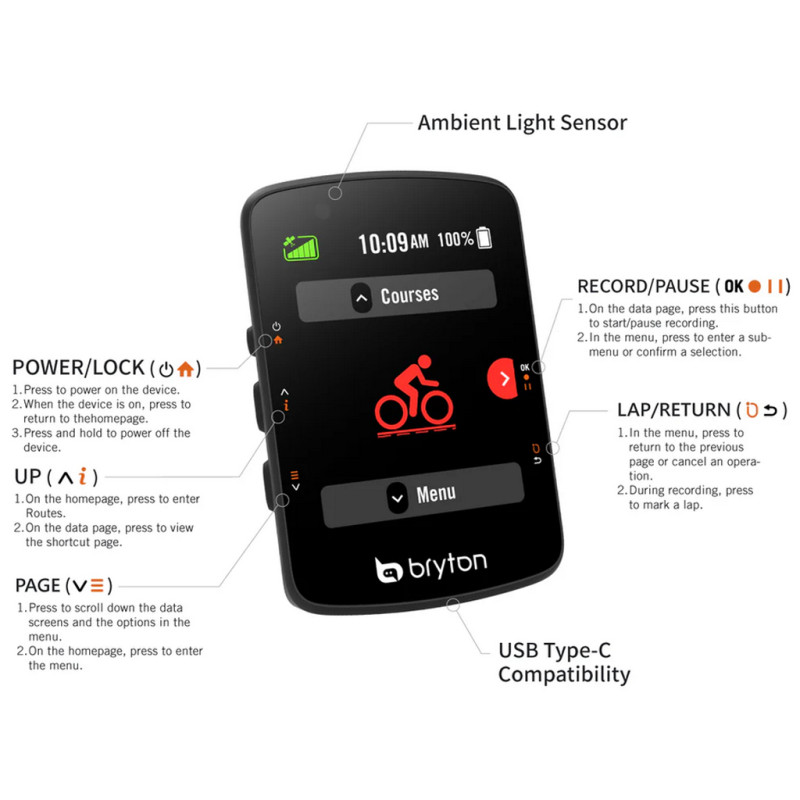
- USB-C port
- Light sensor
- Climb Challenge
- Training features: Bike profile 1, Data grid (max 10), Advanced workouts, Scheduled workouts, Climb Challenge, Auto-pause, Lap / Auto-lap
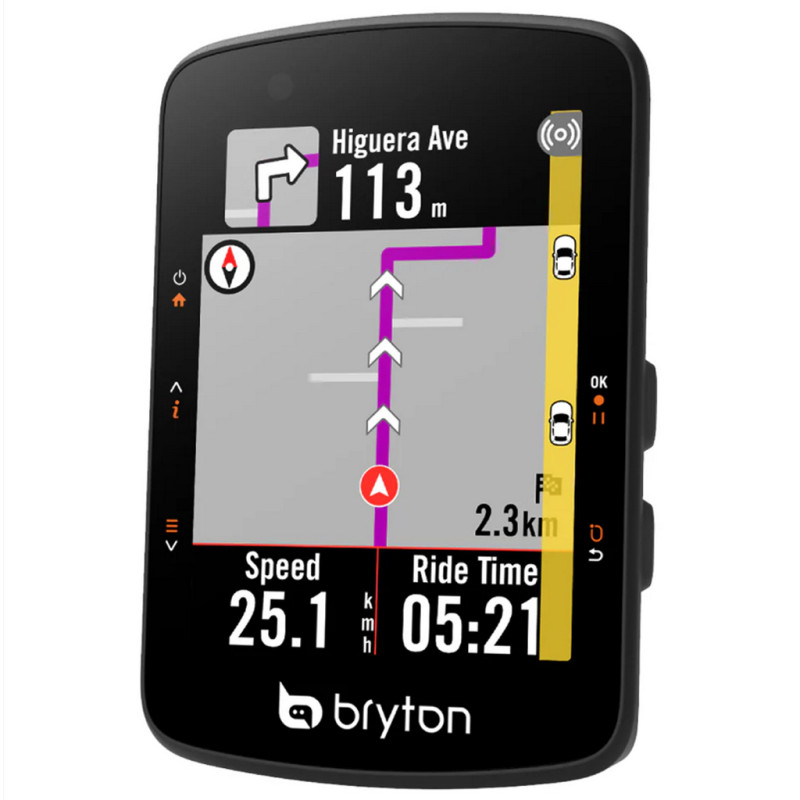
- Navigation features: Route guidance, On-device route recalculation, Turn-by-turn navigation, Distance to next POI/summit, Search for nearby POIs and addresses, Route planning
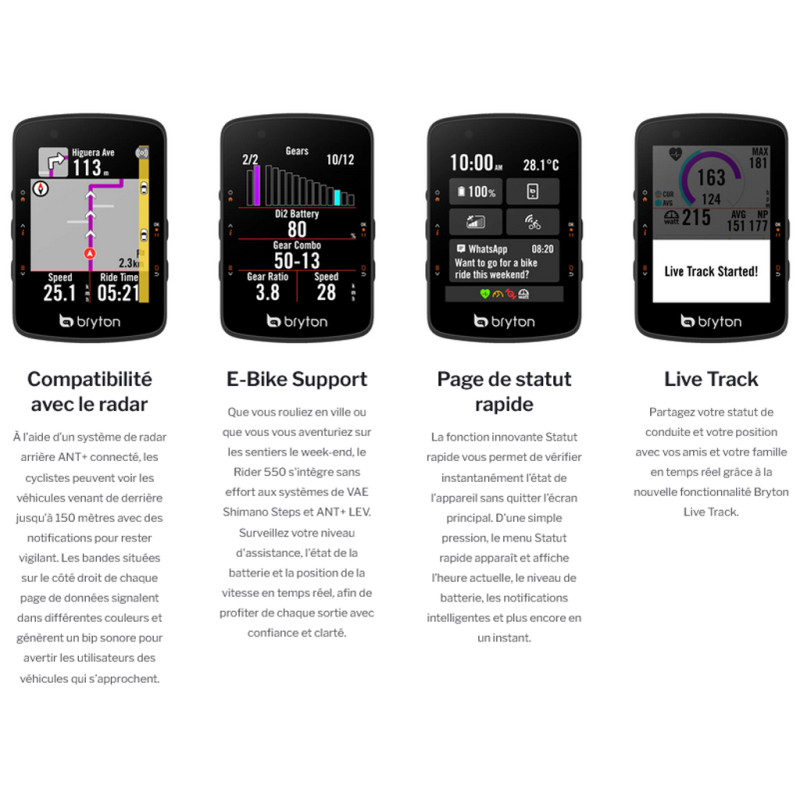
- Safety and tracking features: Live tracking, Group rides and chats, Bike rear-view radar
- Connectivity: Bluetooth sensor, Heart rate, ANT+ sensors, Heart rate, speed, cadence, weight, radar, lights, Compatibility with Di2 / eTap / EPS / K-FORCE WE electronic gear systems, ANT+FE-C connected trainer, Compatibility with e-bikes
- Contents of the D version: sensors, computer, mount, charging cable, user manual
- Brand: Bryton
| Manufacturer weight | 86 g |
|---|---|
| Device dimensions | 84.5 x 56.8 x 16 mm |
| Screen size | 2.8 inches |
| Screen type | An LCD / TFT colour screen is a liquid crystal display lit from behind, like a smartphone screen. It offers vivid colours, good contrast and a detailed map, which makes navigation pleasant. On the other hand, the backlight uses more energy and readability in bright sunlight depends on the brightness setting, at the expense of battery life. |
| Touchscreen | No |
| Colour screen | Yes |
| Map navigation | The bike computer guides you along an imported route with arrows and instructions at each junction, without displaying a background map. The route is prepared in advance in an app. This guidance is enough to follow a planned ride, but it does not show your surroundings if you want to improvise a detour. |
| Sensor connectivity | ANT+ and Bluetooth connectivity means the bike computer communicates with sensors using cycling's two standard wireless protocols. It therefore works with almost all speed, cadence, heart rate and power sensors, as well as smart trainers and radars. It is the most open choice if you already own sensors or plan to add some. |
| Measured functions | Altitude / Cadence is the number of pedal revolutions per minute, expressed in rpm. It helps you pedal efficiently, choose the right gear and structure training sessions, on the road or on a turbo trainer. Displaying it requires a cadence sensor, or a power meter that sends it to the bike computer. HR, or heart rate, is the number of heartbeats per minute, expressed in bpm. It lets you measure the intensity of your effort, ride in the right training zone and track your recovery. Displaying it on the bike computer requires a heart rate chest strap or a compatible optical sensor, connected via ANT+ or Bluetooth. Power is the work you put into the pedals at any given moment, calculated from torque and rotational speed, and expressed in watts. It is a direct measure of effort that does not depend on wind, gradient or cardiac fatigue. Displaying it requires a power meter fitted in the pedals, crankset or hub, or a connected smart trainer. |
| Battery life | 37 h |
| Charging type | USB-C rechargeable |
| Di2 / eTap / AXS compatible | A Di2 / eTap / AXS compatible bike computer connects to Shimano Di2 and SRAM eTap or AXS electronic groupsets. It displays the gear selected and the groupset battery level and, depending on the model, lets you scroll through pages using the handlebar controls. Check this criterion if your bike has, or will have, electronic shifting. |
| Indoor trainer compatible (FE-C) | A turbo trainer (FE-C) compatible bike computer supports the ANT+ FE-C protocol, which allows it to control the resistance of a smart trainer. It can set a target power during a structured session or reproduce the gradient of a recorded route. You can therefore train indoors without a computer or tablet, using the same device as on the road. |
| Rear radar compatible | A rear radar compatible bike computer connects to a radar mounted on the back of the bike and displays vehicles approaching from behind. A visual and audible alert warns you of their arrival, so you can anticipate being overtaken. It is a popular safety device on the road, on busy routes as well as on narrow lanes with poor visibility. |
| Water resistance | The IPX7 rating means the bike computer withstands immersion up to 1 metre for 30 minutes, with the X indicating that dust protection has not been tested. It copes with rain, water spray and mud. For road riding and most gravel or mountain bike rides, this level of protection is sufficient. |
| Barometric altimeter | A barometric altimeter measures altitude from changes in atmospheric pressure, rather than deriving it from the GPS signal alone. The recorded elevation gain is more accurate and consistent, without the altitude jumps that are common with GPS. It is an asset for cyclists who ride in the mountains or on hilly routes and keep a close eye on their climbing. |
| GPS | A multi-constellation (single-band) GPS picks up signals from several satellite systems, such as GPS, Galileo, GLONASS and BeiDou, on a single frequency. Having more satellites in view improves positioning accuracy and speed compared with a basic GPS. This type of reception is well suited to the road and open routes, less so to wooded areas or deep valleys. |
| Temperature | Yes |
| Audible alerts | Yes |
| Number of data screens | Up to 5 |
| Customisable screens | Yes |
| Bell | No |
| Auto-pause | Yes |
| Route import | Yes |
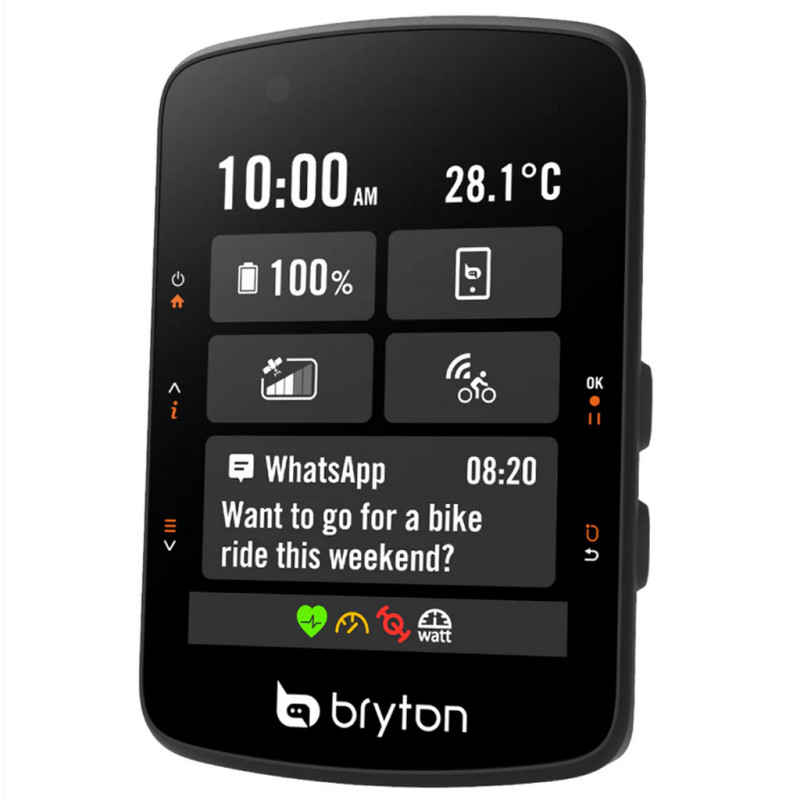
| Unread messages | Yes |
| Strava Live compatible | No |
| Climb detection | A bike computer with climb detection automatically identifies the climbs on a loaded route and alerts you as you approach them. During the climb, it displays the remaining distance, elevation gain and gradient, so you can pace your effort to the summit. This feature is valuable in the mountains, on the road or on gravel, and for sportives with a demanding profile. |
| Back to start | No |
| Elevation profile | Yes |
| Call and text notifications | Yes |
| Lanyard included | Yes |
| Colours | black |
| EAN | 4718251593726 |
| Supplier reference | BRYTON.R550D |
Our team suggests
You may also like
Power meter for left and right pedals
Give your Garmin bike computer a new lease of life
2.8" colour display - 37-hour battery life
With the Zwift Cog and Click system
Touchscreen, 32 gigabytes
Other products
To discover
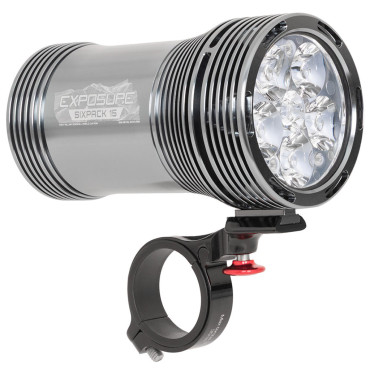
Maximum lumens 6,000 - Runtime 2–36 hours
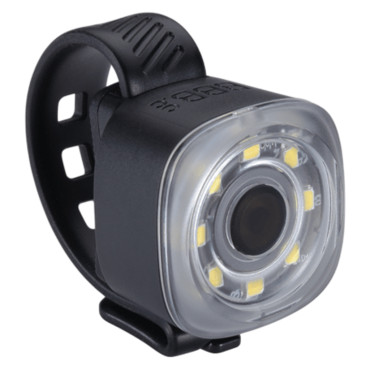
Ultra-versatile, compact and lightweight front light
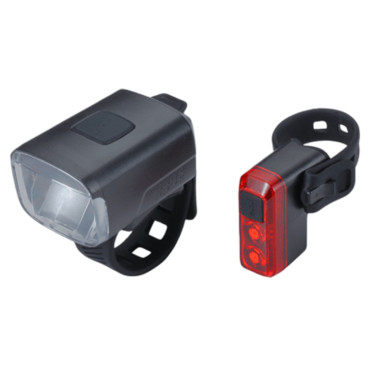
A complete, compact and reliable set – Perfect for daily urban commutes
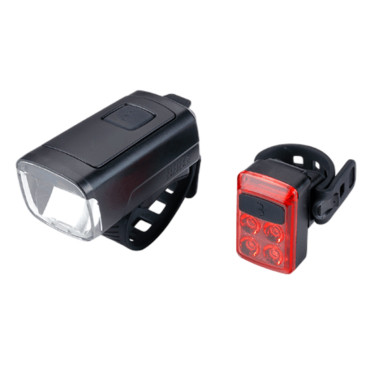
Complete front/rear kit – Easy to use and high-performance
Complete front/rear set - Slice 300 at the front and a powerful COB rear light
Lightweight, powerful front light integrated directly into the bike computer mount
Lezyne Radar React Bike Lighting Pack – Safety and Technology in Harmony
Power: 100 + 50 lumens, 8 modes
Suggestions
TOP SEARCH CATEGORY
TOP BRAND SEARCH
TOP PRODUCT SEARCH
Products