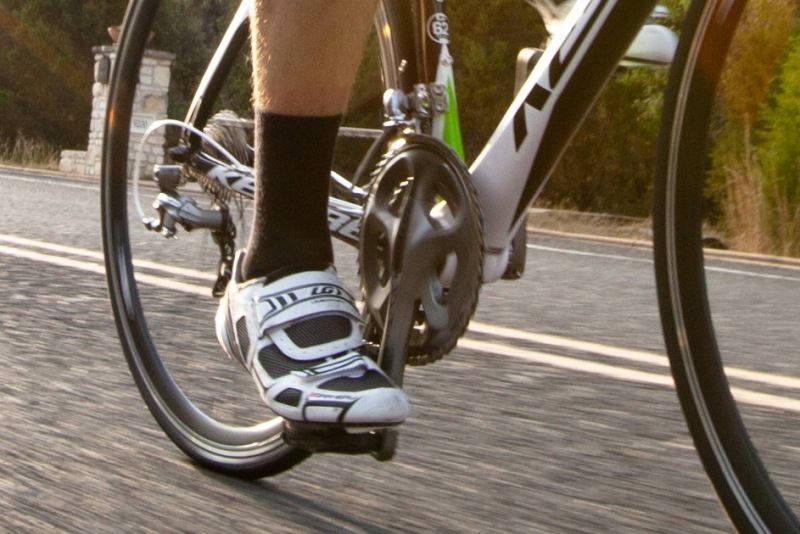
Today, the market offers a wide range of pedal sets for road bikes, all with their own advantages and disadvantages. Single, compact, double, triple pedal sets... the choice is becoming increasingly complex. This raises the question of how to choose a road bike crankset, taking into account various criteria: the type of use, the general equipment of the bike, fitness level and cycling habits.
Choosing your road bike crankset: strengths and weaknesses of each solution
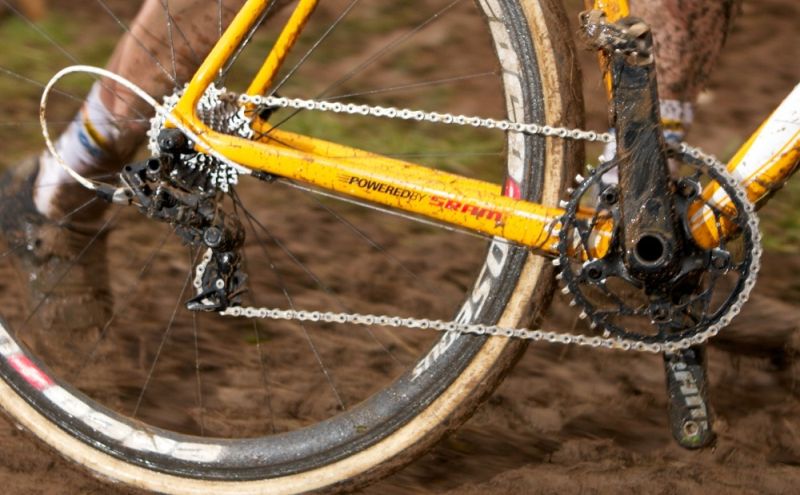
The Sram Force CX1 single chainring group is particularly popular in cyclo-cross for its low weight and reliability./div>
A single chainring is the main feature of the single chainring drivetrain. As you will have understood, the single chainring is unusable on a road bike, but it is the ideal choice for cyclo-cross or, why not, for an urban bike. The choice of teeth is fairly limited, generally ranging from 38 to 46. It is difficult to go above 46 and there is no point in going below 38. Unusually, there is no need to stretch the mono crankset too much on a bike, as it is only intended for this purpose.necessary to dwell too much on the single chainring for this bike, as it is only intended for specific uses, such as cyclo-cross, gravel biking or city biking. We will come back to this in the second part of the article to recommend the most efficient and popular single chainring currently on the market.
The compact crankset
New on the market, the compact crankset has revolutionised the habits of many cyclists. It is important to remember that it was first used in mountain biking.compact crankset has revolutionised the habits of many cyclists. It is important to remember that the compact crankset first proved its worth in mountain biking before gradually making its way into road cycling. Its unique feature is that it incorporates two chainrings with a 110 mm centre distance, which makes it possible to replace these two chainrings and replace them with others with teeth that are better suited to your pedalling style.|>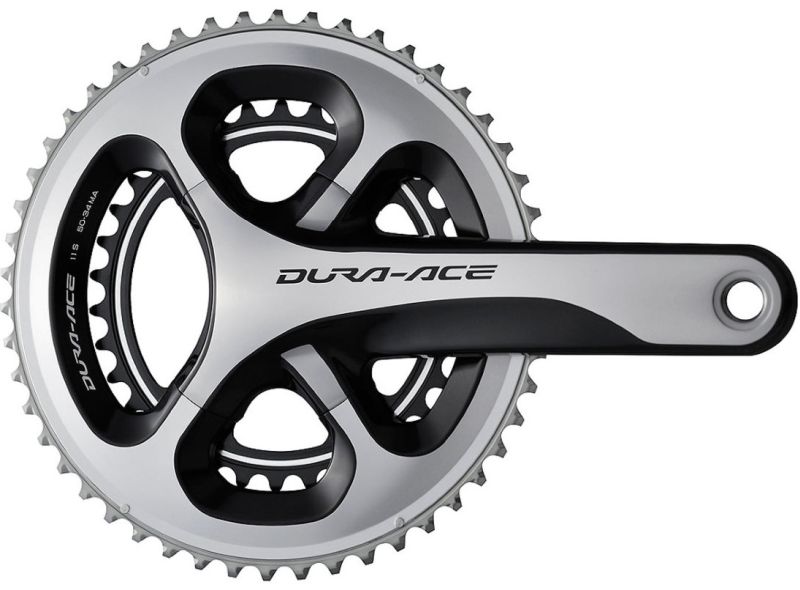
The compact pedal assembly offers a wide range of gear ratios while eliminating the inconveniences of a triple pedal assembly.
So what is the main difference between this and a triple crankset? The weight: up to 300 grams less between a compact crankset and a triple crankset. This is certainly a major advantage, but there is still one drawback: you will not achieve the same range of motion with a compact crankset as with a triple crankset.: you will not achieve the same range of development with a compact crankset as with a triple crankset. Even if you install an 11-speed cassette such as the one offered by Shimano, there will still be some problems with your gear spacing (lack of reach on flat routes or increased risk of chain crossing). Let's say that the compact is best reserved for more experienced, even more seasoned cyclists who aren't afraid of having to carry more weight with a compact on certain climbs.
Double crankset
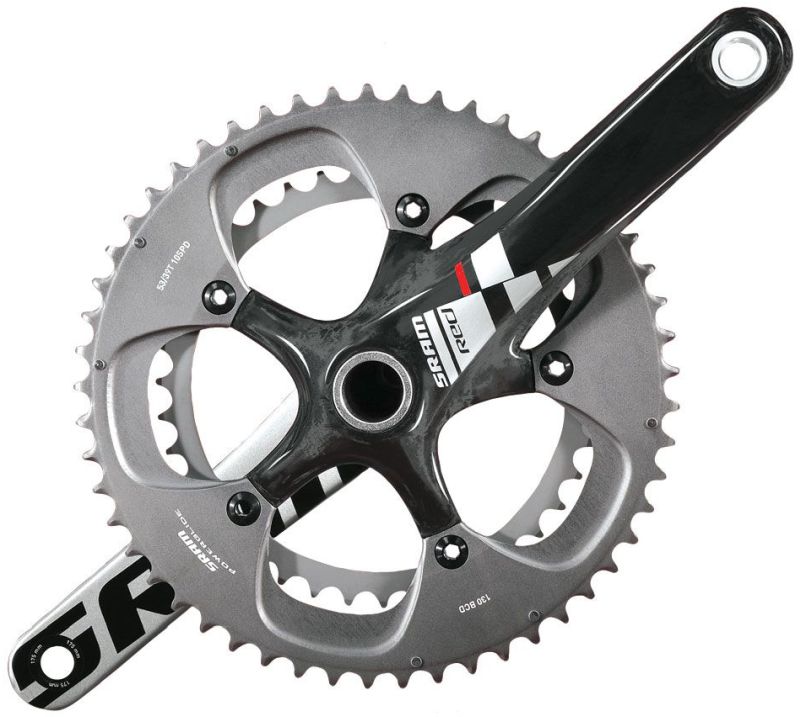
130 mm centre distance for the double pedal.
A favourite among couriers, the double crankset is the best choice when you're looking for performance. A major advantage of the double crankset is that it is easily adaptable, allowing you to switch between several combinations by changing the chainrings, from 53/39 (the most classic) to52/42 or even 50/38. Although highly versatile, it is important to remember that you cannot go below 38 with your double crankset due to the insufficient star diameter offered by most manufacturers and the non-adjustable 130 mm centre distance.insufficient chainring space on most manufacturers' models and a non-adjustable 130 mm centre distance. In summary, the double crankset offers manyfor cyclists who are at a good level and are comfortable with high gear ratios, which are also highly adjustable. Conversely, cyclists who are not necessarily looking for performance will find it has a number of disadvantages.
Triple crankset
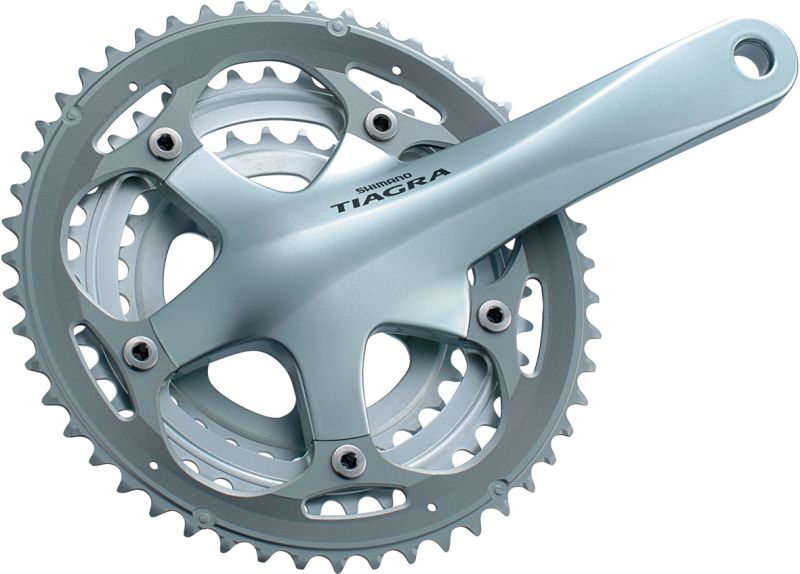
The triple pedal has disappeared from the highest ranges and has become rare in original equipment.
The solution for all mountain passes, flat roads and valleys is undoubtedly the triple crankset. Although most manufacturers are reluctant to equip their new bikes with triple cranksets, it is clear that this is the ultimate crankset for getting anywhere. With three chainrings, often configured as 52/42/32, it is ideal for less experienced cyclists and cycle tourists. For more powerful cyclists, the triple crankset can quickly become a nuisance as it prevents you from pushing hard, unlike the double crankset, althoughit is possible to change the chainrings on your triple crankset to suit your pedalling habits. However, it should be noted that there is a significant chain crossing phenomenon that needs to be managed, as well as thechain crossing, which must be managed, as well as the repetition of certain gear ratios.|>
Tips for choosing your road bike crankset
As you will have understood, all the cranksets presented here have features that make them interesting for some people and unsuitable for others.|>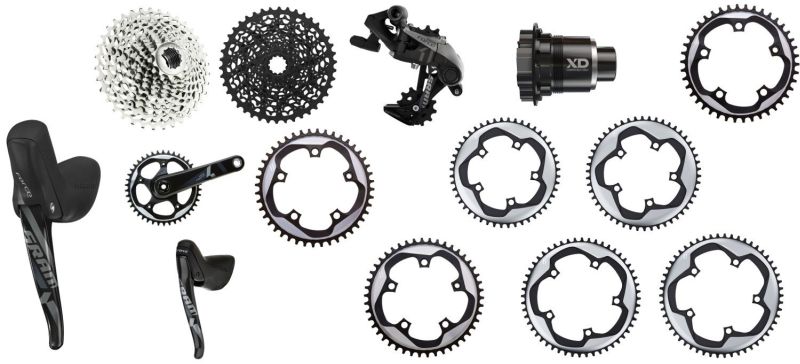
Single-chainring groupsets require careful selection of the chainring and sprockets to ensure that the gear ratios are suited to the type of riding.span>
As mentioned above, the single crankset is only suitable for cyclo-cross riders, as its use is very specific.We can only recommend the Sram XX1, a true benchmark on the market that is popular with professionals and amateurs alike thanks to its chain retention system with the rear derailleur.with the rear derailleur. Although a true benchmark, this group is still quite expensive: the Sram X01, X1 and Sram GX alternatives are more affordable. The American manufacturer has also developedthe single chainring solution for road bikes with the Sram Force 1 and Sram Rival 1 groupsets, as well as for cyclo-cross with the Sram Force CX1. For compact, double or triple cranksets, it is up to each individual to choose the one that suits them best according to their pedalling habits, fitness level, etc. For heavier cyclists, we generally recommenda triple crankset, which spreads out the gear ratios and responds better than other types of cranksets when high power is required. Then, between double and compact, it's up to you to decide what suits you best, although the compact stands out for its modularity, which allows for a large number of different combinations to suit all terrains.