Speed and distance data
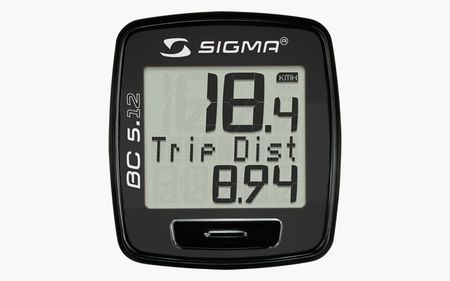
The first bicycle speed sensors were based on a counter that counted the number of revolutions made by the front wheel in a given period of time, taking into account the circumference of the wheel.This system is still used today, particularly on traditional bike computers, except that the mechanical sensor has been replaced by a magnetic sensor. The magnetic cycle sensor collects the speed of the bicycle according to the frequency at which a magnet passes a given point. This method provides extremely reliable speed information once the counter has been correctly calibrated according to the wheel size. The cycle sensor also informs the user of the distance travelled, again based on the number of wheel revolutions. On recent models of GPS bike computers, data relating to speed and distance travelled is captured by an accelerometer instead of a magnetic sensor.|>

In most cases, the accelerometer is supported by satellite geolocation. The speed and distance travelled are therefore calculated based on the movement of the bike and the geographical coordinates. However, the reliability of the data provided by the accelerometer remains relative and varies depending on the quality and range of the accelerometer.provided by the accelerometer remains relative and varies depending on the quality and range of the GPS. The accelerometer may also be disrupted by shocks and vibrations, providing inaccurate data on certain models.be disrupted by shocks and vibrations, providing inaccurate data on certain models, whether on road bikes or mountain bikes. This information may be even more inaccurate when passing through wooded areas or areas with poor GPS signal reception. Although accelerometers and GPS geolocation are becoming more common, the magnetic sensor remains the most reliable device for reading speed, which is an advantage for standard speedometers.are a more modern and practical solution, the magnetic sensor remains the most reliable device for reading speed, which is an advantage for standard speedometers. However, high-end and mid-range GPS models are more powerful and more accurate in displaying this information.displaying this information. Many GPS models are also equipped with a magnetic cycle sensor, as found on Garmin GPS bike computers.|>
Altitude data
Altitude data is provided either by a barometric altimeter orby GPS coordinates. This data includes real-time altitude, as well as the average altitude and total elevation gain during a session.and total elevation gain during a session.|>
On standard meters equipped with an altimeter, the altitude is provided based on the barometric pressure of the location where the bike is located in relation to sea level. To provide reliable information, the altimeter must be calibrated by travelling to levelled reference points to record thealtitude at these locations on the meter. Once calibrated correctly, the barometric altimeter provides very accurate information. However, this accuracy tends to deteriorate over time, and calibration must be repeated regularlyFor their part, some entry-level GPS devices collect altitude information via satellite-based geographical coordinates. However, this method remains imprecise and less reliable than barometry.|>
On average, the difference between the altitude provided by GPS and the actual altitude is around 20 metres. This discrepancy sometimes results in unrealistic data, such as descents during a climb. Many mid-range and high-end GPS models for bikes are equipped with a barometric altimeter, which can prove to be more reliable than conventional altimeters.more reliable than traditional speedometers. This combination improves the accuracy of altitude information, but above all reduces the frequency of GPS signal acquisition, which is essential for smooth operation.altitude information, but above all reduces the frequency ofThis is the case with the Lezyne Power GPS bike GPS.
Shock and moisture resistance</h2>
Often lighter and more compact, the classic bike computer is highly resistant to shocks and vibrations. It is designedsuitable for a wide range of uses, from touring to the most aggressive mountain biking disciplines. However, water resistance can vary greatly depending on the range and model of these standard computers. Although bike GPS devices can bebe more sensitive to shocks due to their size, especially touchscreen models, they can be completely reliable if used with the appropriate computer accessories.|>


Shockproof silicone covers and mounts for handlebars or bike frames are available on the market. In addition, waterproofing, which is a key criterion for reliability, is a particular focus for manufacturers of bike GPS devices. In this regard, most GPS devices comply with IPX6 and IPX7 waterproofing standards.|>
Battery life
In terms of battery life, the standard meter boasts a long battery life and the meter batteries can last up to 2 years depending on the frequency of use. This makes them very reliable devices, especially for occasional users and hiking enthusiasts. For their part, bike GPS devices have a battery life of 8 to 20 hours, especially since the battery requires careful monitoring of the charge indicator to maintain its performance over time.|>
However, battery life may decrease over time depending on frequency of use and quality of maintenance. While standard bike computers are robust and simple, GPS devices for bikes are no less reliable, especially mid-range and high-end models. GPS devices are accurate and durable, provided they are used and maintained properly. Numerous accessories are available to improve the attachment to the handlebars and the impact resistance of bike GPS devices.