The MTB brake pads have specific properties that affect their braking performance. However, in XC or DH, the stresses are very different. So, which pads are best for which type of riding? This is a question that often arises when choosing between organic and metal mountain bike pads. The former are the most affordable and are fitted to most mountain bikes as original equipment. WhenWhen replacing them, it may be wise to opt for metal pads, provided that you ensure that this choice is well suited to the intended use.
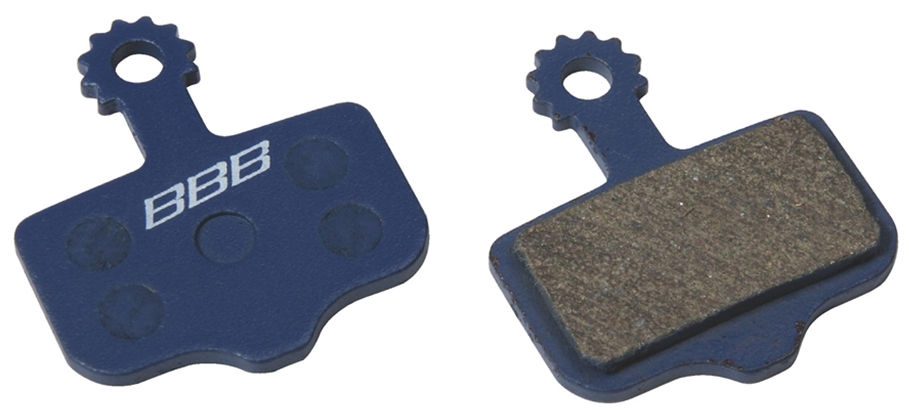
Semi-metallic MTB pads are a good compromise between organic and metal pads.
In order to understand the differences between the various types of mountain bike brake pads, it is first necessary to understand their design. Mountain bike pads consist of a backing plate with a pad attached to it that comes into contact with the brake disc. The pad is made up of several components designed to provide friction with the disc or heat resistance. These components are integrated into a binder that can bebe resin for organic pads, or metal for metallic pads (or sintered pads).. There are also semi-metallic (or semi-fired) MTB pads, and organic pads that include metal in the resin binder.
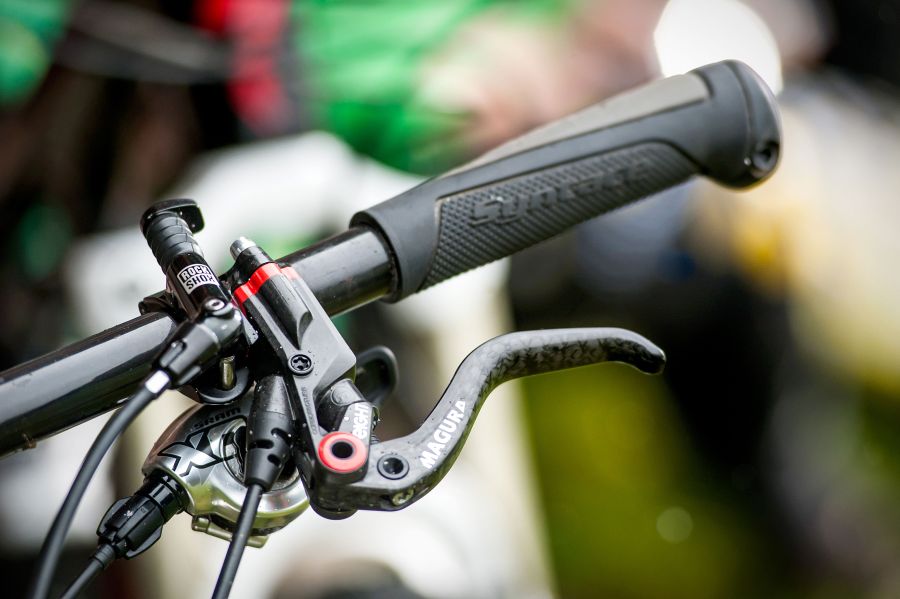
The heat from the pads is transferred to the entire brake system, so heat dissipation is essential.
Galling refers to a change in the surface condition of the pads, which become smooth and therefore no longer provide friction. This phenomenon occurs during prolonged braking at low pressure: instead of being torn away, the material melts and forms a surface layer that prevents friction.friction.
However, this deterioration of the pads is not necessarily irreversible. Often, applying sandpaper or even braking a few times can remedy the situation, as can the discs, which can also be recovered.
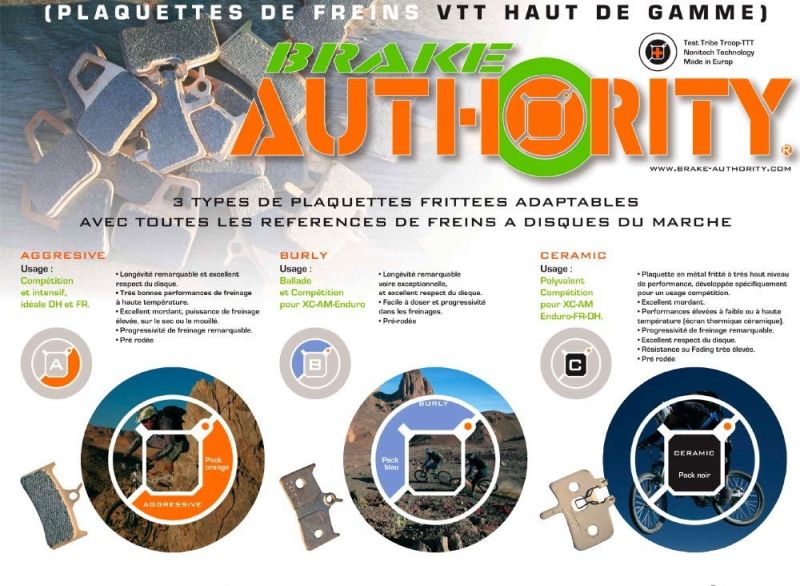
Braque Authority ceramic MTB pads are a benchmark for high temperature resistance and durability.
Metal MTB pads offer superior braking power in wet and muddy conditions and have a much higher fade point. However, once their limit is reached, they lose their braking capacity very quickly. They also have a much longer service life. Metal MTB pads require a short warm-up period, two or three braking actions, before reaching their optimum operating temperature. It should be noted that they can also be a little noisier than organic pads. Their price ranges from £10 to £35.
There are also ceramic MTB pads. These are even more resistant to high temperatures and are particularly suitable for use in competitions.for competitive use.
MTB pads: different compositions
Semi-metallic MTB pads are a good compromise between organic and metal pads.
In order to understand the differences between the various types of mountain bike brake pads, it is first necessary to understand their design. Mountain bike pads consist of a backing plate with a pad attached to it that comes into contact with the brake disc. The pad is made up of several components designed to provide friction with the disc or heat resistance. These components are integrated into a binder that can bebe resin for organic pads, or metal for metallic pads (or sintered pads).. There are also semi-metallic (or semi-fired) MTB pads, and organic pads that include metal in the resin binder.
MTB pads: fading, recovering and icing
To understand the stresses applied to MTB brake pads, we need to understand the different phases they can encounter. Fading literally refers to the loss of braking power due to excessive heat in the pads. This condition is caused by the deterioration of the surface layers of the pads, which are then lubricated. Cooling will allow the pads to regain their friction coefficient. This may take more or less time: this ability to cool is called recovery.|>The heat from the pads is transferred to the entire brake system, so heat dissipation is essential.
Galling refers to a change in the surface condition of the pads, which become smooth and therefore no longer provide friction. This phenomenon occurs during prolonged braking at low pressure: instead of being torn away, the material melts and forms a surface layer that prevents friction.friction.
However, this deterioration of the pads is not necessarily irreversible. Often, applying sandpaper or even braking a few times can remedy the situation, as can the discs, which can also be recovered.
Metal, organic and ceramic MTB pads: comparative advantages
Organic MTB pads offer very good efficiency from the first braking, even at low speeds. However, their fade temperature is lower than that of metal VTT pads, while maintaining better tolerance to overheating, meaning thatthey lose their braking power less quickly. Organic pads also have a shorter service life and, due to their soft material, are particularly sensitive to mud. A major advantage is their very affordable price, ranging from £5 to £20 depending on the level of sophistication. Semi-metallic pads, on the other hand, semi-metallic pads, which incorporate a dose of metal into their resin, delay the point at which they start to fade and also extend their service life. They are also slightly more expensive.Braque Authority ceramic MTB pads are a benchmark for high temperature resistance and durability.
Metal MTB pads offer superior braking power in wet and muddy conditions and have a much higher fade point. However, once their limit is reached, they lose their braking capacity very quickly. They also have a much longer service life. Metal MTB pads require a short warm-up period, two or three braking actions, before reaching their optimum operating temperature. It should be noted that they can also be a little noisier than organic pads. Their price ranges from £10 to £35.
There are also ceramic MTB pads. These are even more resistant to high temperatures and are particularly suitable for use in competitions.for competitive use.