
dark green
Vélo gravel Scott Addict Gravel 40 Wenge Green 2026
A versatile, high-performance gravel bike
€2,699.00

82 Products
A versatile, high-performance gravel bike

Aluminium frame - Aluminium wheels

A versatile and comfortable gravel bike

2x10-speed drivetrain


New framework for 2027

Shimano GRX 2x12-speed drivetrain designed for gravel riding

HM2X carbon frame – Shimano GRX400 10-speed – Hydraulic disc brakes

Gravel bike - Aluminium frame

Ideal for getting started with gravel cycling - 9kg

A versatile, high-performance gravel bike

Carbon frame – Aluminium wheels


High-end carbon gravel frame kit - For 27.5x2.1 or 700x28 to 700x40 wheels

9.25kg - Carbon frame, Sram mono groupset, Fulcrum wheels, Continental tyres

Carbon frame with integrated suspension

BMC Gravel Bike – for bikepacking or long rides


Carbon frame – Aluminium wheels

Carbon frame - Aluminium wheels

Carbon frame - Aluminium wheels

Mahle X35 hub motor - Aluminium frame


9.0kg - Carbon frame, Sram mono groupset, Mavic Allroad wheels

9.25 kg - Carbon frame, aluminium wheels

The ultimate gravel bike for adventure

2-chainring drivetrain

Carbon frame - Sram Apex XPLR 12-speed drivetrain - 9kg

Top performance at the best price

Carbon frame, aluminium components

9.50 kg - Carbon frame

Test rides in our shops


Double chainring assembly

Di2 drivetrain with double chainrings

Ultra-light 1250 g frame kit - Matte Black colour

BMC gravel bike: off-road, comfortable and versatile

Gravel endurance - Isospeed technology - 3rd generation

Top-of-the-range performance, single chainring

HM3X carbon frame, 13-speed drivetrain

Gravel racing bike - Carbon frame - Carbon wheels

Carbon frame - Power meter

Italian style - carbon frame - aluminium wheels

Carbon frame – Aluminium wheels

Carbon frame - Aluminium wheels

12-speed groupset - Carbon frame

Carbon frame - Aluminium wheels - Mahle X20 motor

A lightweight and manoeuvrable electric-assist gravel bike

BMC Gravel Bike – carbon frame for competition – SRAM Rival 1x13

Gravel bike with high-performance, versatile carbon frame

Competition Gravel Bike

8.85 kg - Carbon frame, aluminium wheels

Carbon frame – electric gears – all-terrain

9.33 kg - Carbon frame - Carbon wheels

Carbon frame - light front and rear suspension

9.33 kg – Carbon frame – Carbon wheels

Competition Gravel Bike

8.7 kg - Carbon frame - Carbon wheels
Frequently asked questions
A gravel bike is designed for mixed road/trail terrain, whilst a road bike is optimised for tarmac. The main differences: a gravel bike accommodates tyres from 35 to 45 mm (compared to 25–30 mm on a road bike), its bottom bracket is higher to clear obstacles, its geometry is more stable with a longer wheelbase and a more open head angle, it is fitted with hydraulic disc brakes and has numerous mounting points for panniers. Its riding position is intermediate: neither as aggressive as a road bike nor as upright as a mountain bike. On the road, a gravel bike is slightly slower than a dedicated road bike, but on trails it is significantly more at ease.
Yes, with the right tyres, a gravel bike can be used effectively on the road. Fitted with well-inflated (between 4 and 5 bar) 35–38 mm slick or semi-slick tyres, a gravel bike rides almost as fast as a road bike on tarmac, with superior comfort. The loss of speed is estimated at 1 to 3 km/h at equivalent speeds compared to a well-equipped road bike. For cyclists who ride 70% on roads and 30% on trails, a gravel bike with two sets of wheels (slick road + knobbly gravel) is a more versatile solution than a pure road bike.
Between 38 and 42 mm in 700c is the most versatile compromise; 40 to 47 mm in 650b for more technical terrain. 38–40 mm tyres offer a good balance between road and trails: wide enough for dirt tracks and forest trails, yet still roll well on tarmac. Wider tyres (42–45 mm) improve comfort and off-road grip at the cost of slightly higher rolling resistance. The 650b format (smaller wheels) allows for even wider tyres (47–50 mm) to be fitted for more challenging terrain. When used tubeless (recommended), pressures of 2 to 3.5 bar depending on the terrain help prevent punctures and improve shock absorption.
The single chainring (1×11 or 1×12) simplifies use, whilst the double chainring offers a wider gear range for long distances. The single chainring with a wide cassette (10-42 or 10-50 with Shimano GRX or SRAM Rival/Force groupsets) is the most common configuration on modern gravel bikes. It eliminates the front derailleur and simplifies gear management on varied terrain. Its drawback: the less close spacing between gears on long flat rides. The double chainring (50/34 compact or 48/31 sub-compact) is preferred for gravel granfondos and cyclists who also ride a lot on the road.
Yes, in fact, this is the use for which the gravel bike is best suited among drop-bar bikes. Gravel frames are designed with numerous mounting points for frame bags, handlebar bags, saddle bags and additional bottle cages. Some models offer up to 3 mounting points on the fork legs and the frame. The gravel bike’s more stable geometry and longer wheelbase ensure stable handling even with 5 to 10 kg of luggage. A standard road bike does not allow this type of load without affecting handling.
If the terrain is technical (challenging singletrack, banked corners, obstacles), a mountain bike is essential. On forest tracks, trails and dirt tracks, a gravel bike is more than adequate. A gravel bike can handle fast-rolling tracks, loose gravel and moderately muddy sections. It reaches its limits on fast, technical descents, rocks and roots at high speed, where a mountain bike’s suspension and wide tyres make a real difference. A gravel bike, on the other hand, performs significantly better on the road, is lighter and better suited to bikepacking. For a mix of 60% fast-rolling trails and 40% road, a gravel bike is the best choice.
Between €1,500 and €3,000 for a very good entry-level aluminium or carbon gravel bike, €3,000 to €6,000 for top-of-the-range models. Under €1,500, the groupsets are entry-level (Shimano GRX 400, SRAM Apex) and the hydraulic brakes are basic. Between €1,500 and €3,000, you get mid-range groupsets (GRX 810, SRAM Rival, Force), often with optional electronic shifting, tubeless tyres and lightweight aluminium or carbon frames. Above €3,000, high-end carbon frames (Specialized Diverge Comp, Cannondale Topstone Carbon, Trek Checkpoint SL) offer lightness, stiffness and comfort, enhanced by vibration-damping technologies.
Yes, gravel-specific groupsets are better suited to the demands of off-road riding. The Shimano GRX features brake levers with a longer reach for braking with thick gloves, derailleurs designed to handle cable tension variations caused by rough terrain, and wider gear ranges (11-34 to 11-42 cassettes). The SRAM Rival AXS and Force AXS offer the advantage of cable-free drivetrains, highly valued for their reliability in muddy conditions. Road groupsets (Shimano 105, Ultegra) can be used on a gravel bike, but with smaller cassettes and less clearance.
Yes, and it is precisely this format that has caused the popularity of gravel cycling to skyrocket. Gravel races (BCN Gravel, Atlas Obscura, Traka, amateur Dirty Kanza) are designed for gravel bikes. For competition, opt for a sporty gravel bike with aggressive geometry (short stack, long reach), a 1×12 single-chainring drivetrain with a 10-42 cassette, and fast 38–40 mm tubeless tyres (WTB Riddler, Panaracer GravelKing SK). The weight of the bike matters less than on the road, as varied terrain penalises tyres that are too narrow and unstable geometries more.
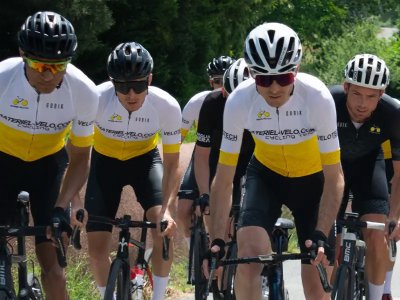
Yes, on flat and slightly undulating terrain; the gap widens on long climbs and sprints. In a peloton at moderate speed (25–35 km/h), a gravel bike with slick or semi-slick tyres keeps perfectly pace with a road bike. The difference in top speed is 2 to 4 km/h in favour of the road bike on favourable terrain, due to the rolling resistance of the wider tyres. On the other hand, the gravel bike is less disadvantaged on descents on rough roads, where the wide tyres offer a real advantage. For mixed rides with friends, a gravel bike won’t be a major hindrance.
Suggestions
TOP SEARCH CATEGORY
TOP BRAND SEARCH
TOP PRODUCT SEARCH
Products