All our advice on choosing a front derailleur that is suitable for your bike or mountain bike, but also compatible with your complete groupset. When choosing a front derailleur, it is essential to first consider several selection criteria, namely the use, compatibility and capacity of the equipment. These factors are decisive in determining the suitability of the front derailleur for road bikes or for">front derailleur for road bikes or for mountain bikes, as well as its functionality.
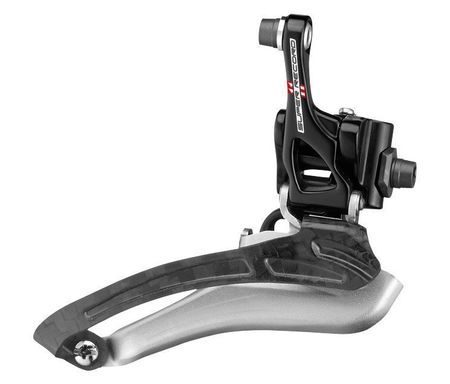
Braze-on or brazed derailleur mounts are very common on recent road bike frames. With this standard, the derailleur is fixed using screws on a bracket already present on the frame. The Direct Mount derailleur mount uses the same principle as the Braze On system, which consists of fixing the derailleur to a support already present on the frame.same principle as the Braze On system, which consists of attaching the derailleur to a bracket already present on the frame. However, this standard is more common on mountain bike frames. The attachment is located at the base of the derailleur for SRAM S1, S2 and S3 standards and Shimano E2 derailleurs. On Shimano D-type mountain bike front derailleurs, the attachment is located on the upper part of the derailleur. The standard for SRAM Direct Mount high derailleurs is similar to that of Shimano D-type derailleurs.
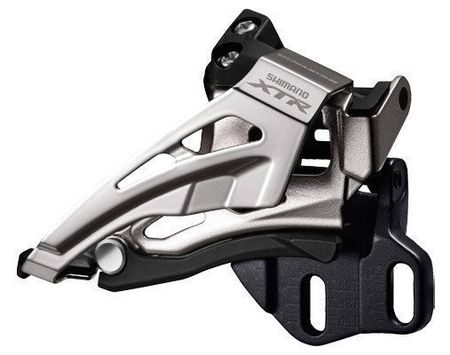
Clamp-on or clamp-style derailleur mounts are found on both mountain bike and road bike frames. However, compatibility of the derailleur clamp is more difficult on profiled frames. In addition, it is advisable to use a torque wrench to ensure that the clamp is tightened to the correct torque on a carbon bike frame to avoid irreversible damage.The derailleur is attached to the bottom bracket shell in a manner specific to Shimano E-type derailleurs. This standard is more common on mountain bikes.|>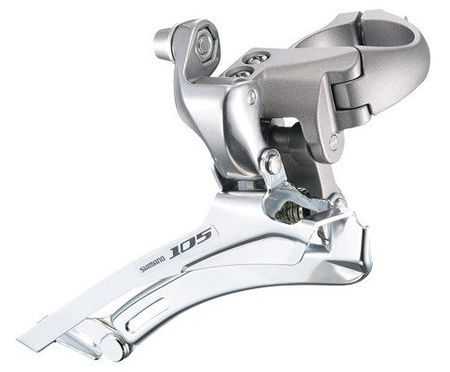
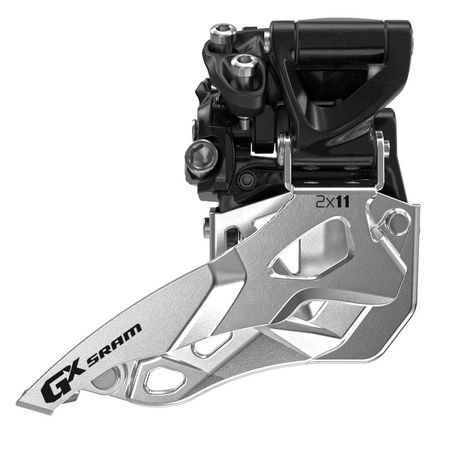
You can choose between a Campagnolo front derailleur, SRAM or Shimano front derailleurs, with a choice of high-end, mid-range or entry-level models. A cyclist who wants to install a derailleur that is robust enough for intensive use will certainly appreciate a steel or aluminium derailleur, while a road cyclist who wants a lightweight derailleur will prefer a aluminium model.will certainly appreciate a steel or aluminium derailleur, while road cyclists looking to make their groupset as light as possible will find what they are looking for in carbon models.
The type of front derailleur: for road bikes or mountain bikes?
It is important to know that front derailleurs for road bikes are designedcompletely different from a front derailleur for mountain bikes, not only in terms of appearance but also from a technical point of view. These derailleurs have to manage very different components on a road bike and a mountain bike, whetherthe bike chain or the chainrings. The chain line is one of the biggest technical differences between these two platforms. This is reflected in the distance between the centre of the bike frame's seat tube and the centre of the two chainrings on a double crankset. On a triple crankset, this measurement is taken to the outer edge of the middle chainring.On a triple chainring mountain bike crankset, manufacturers such as Shimano set the ideal chainline between 47.5 and 50 mm depending on theThis figure is between 43.5 and 47 mm on a road bike. This measurement is between 43.5 and 47 mm on a road bike. A road bike derailleur is therefore unsuitable foruse on all terrains. The incompatibility of these two platforms can result in inefficient transmission and difficulties in changing gears.Compatibility of the front derailleur with the frame
Once you have chosen your front derailleur for road or off-road use, it is important to ensure that it is compatible with your bike frame. This compatibility depends mainly on the type of attachment and the pull of the derailleur cable.|>Front derailleur attachment type: clamp-on, braze-on, etc.
The derailleurs available on the market meet several standards referring to the type of attachment provided on the frame.Braze-on or brazed derailleur mounts are very common on recent road bike frames. With this standard, the derailleur is fixed using screws on a bracket already present on the frame. The Direct Mount derailleur mount uses the same principle as the Braze On system, which consists of fixing the derailleur to a support already present on the frame.same principle as the Braze On system, which consists of attaching the derailleur to a bracket already present on the frame. However, this standard is more common on mountain bike frames. The attachment is located at the base of the derailleur for SRAM S1, S2 and S3 standards and Shimano E2 derailleurs. On Shimano D-type mountain bike front derailleurs, the attachment is located on the upper part of the derailleur. The standard for SRAM Direct Mount high derailleurs is similar to that of Shimano D-type derailleurs.
Clamp-on or clamp-style derailleur mounts are found on both mountain bike and road bike frames. However, compatibility of the derailleur clamp is more difficult on profiled frames. In addition, it is advisable to use a torque wrench to ensure that the clamp is tightened to the correct torque on a carbon bike frame to avoid irreversible damage.The derailleur is attached to the bottom bracket shell in a manner specific to Shimano E-type derailleurs. This standard is more common on mountain bikes.|>
Cable pull
Apart from the fixing, the direction of pull of the derailleur cable is another factor to consider for compatibility. A high-pull derailleur is designed to be installed on a frame where the cable stops are located on the horizontal tube so that the cable entersfrom the seat tube. A bottom pull derailleur, on the other hand, is designedfor frames with cable stops located on the down tube for cable entry from the bottom bracket shell. Many recent derailleur models feature Dual Pull technology, allowing them to be installed on all types of bike frames, regardless of cable pull.|>The capacity of the derailleur
The capacity of the front derailleur on a bike determines the number of chainrings and cassette sprockets that can be used. |>Capacity in relation to chainrings
Unlike older derailleur models, recent components are more precise in terms of gear changes and are therefore more rigorous in managing the number of chainrings. In this sense, derailleur models are designed by manufacturers according to different variants for double-chainring and triple-chainring cranksets.|>Capacity relative to the cassette
The capacity of the derailleur in relation to the cassette on a road bike or mountain bike should not be overlooked either. This is because the fork of a front derailleur compatible with a 7- or 8-speed cassette may be shallower than that of derailleurs for 9-, 10- or 11-speed cassettes. Installing an unsuitable derailleur can thereforecause chain friction, resulting in unpleasant noises, poor transmission efficiency and premature wear of the bike's components. Once the criteria for compatibility with the frame and transmission components have been met, you can choose your front derailleur based on your preferred brandpreferred brand and the best compromise between range, quality and budget.You can choose between a Campagnolo front derailleur, SRAM or Shimano front derailleurs, with a choice of high-end, mid-range or entry-level models. A cyclist who wants to install a derailleur that is robust enough for intensive use will certainly appreciate a steel or aluminium derailleur, while a road cyclist who wants a lightweight derailleur will prefer a aluminium model.will certainly appreciate a steel or aluminium derailleur, while road cyclists looking to make their groupset as light as possible will find what they are looking for in carbon models.