Everything you need to know about bicycle inner tubes, from their invention to the latest technical developments and how to use them properly for your needs.
Since its invention, the bicycle inner tube or MTB has evolved considerably in terms of composition, configuration and manufacturing technology. It is nownow used on all types of bikes, including mountain bikes, road bikes, cyclo-cross bikes and BMX bikes. However, their shape has changed very littleand remains a rubber tube with a valve. What is a bicycle inner tube? Let's take a look at every aspect of this pneumatic component.
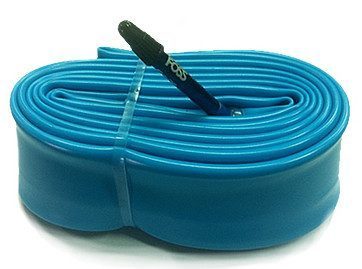
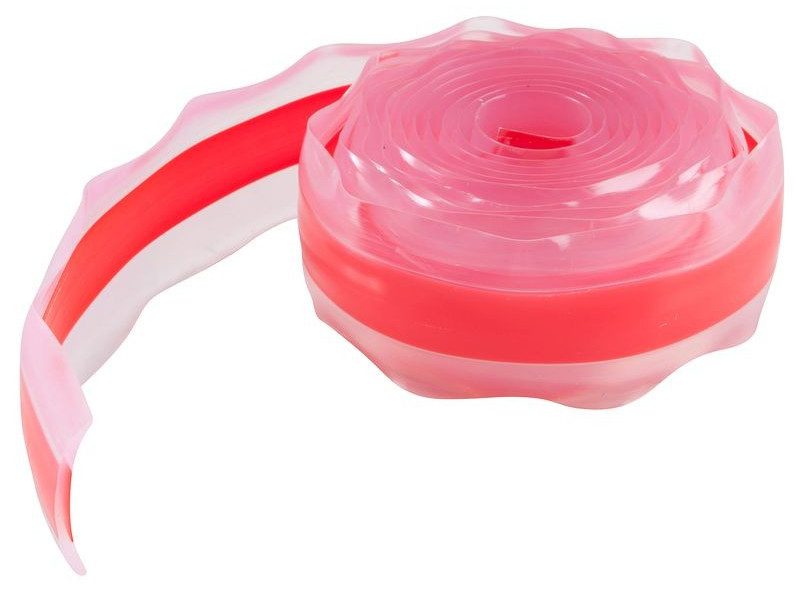
Versatility is also one of the main advantages of inner tubes. Available in a wide range of configurations, they can meet the needs of every type of cyclist.For example, a competitor or competitive cyclist may opt for a latex inner tube for lightness and low rolling resistance. A veteran cyclist may prefer butyl rubber inner tubes for improved puncture resistance. It is even possible to apply a preventive liquid and install a puncture-resistant reinforcement strip in the bottom of the tyre to maximise protection against punctures.

Since its invention, the bicycle inner tube or MTB has evolved considerably in terms of composition, configuration and manufacturing technology. It is nownow used on all types of bikes, including mountain bikes, road bikes, cyclo-cross bikes and BMX bikes. However, their shape has changed very littleand remains a rubber tube with a valve. What is a bicycle inner tube? Let's take a look at every aspect of this pneumatic component.
Bicycle inner tube: its origins
The invention of the inner tube dates back to the 19th century. Given that bicycle tyres in their current form had not yet been invented at the time, the inner tube was invented in France., the inner tube was mainly used in the configuration of tubular tyres in its early days. It was notwas not until around 1891 that Édouard Michelin invented the detachable bicycle tyre, which could be used with a tubular inner tube. For more than a century, the latter was an essential component of every bicycle tyre, until the advent of the tubeless tyre., it was an essential component of every bicycle tyre until the introduction of tubeless tyres in the 2000s. Despite the development of numerous pneumatic solutions, such as bicycle tubular tyres and tubeless or tubeless-ready tyres, the inner tube is still used extensively.of numerous tyre solutions, such as bicycle tubular tyres and tubeless or tubeless-ready tyres, inner tubes are still widely used in the cycling world. Manufacturers are constantly improving them to offer ever more reliable, lighter and more efficient products.The characteristics of a bicycle inner tube
A bicycle inner tube consists of a tubular elastic membrane. It is made of butyl rubber or latex, in various sizes and thicknesses. These factors influence its strength, weight and performance. The role of the inner tube is to maintain the tension of the tyre wall so that it can withstand the pressure of the cyclist's weight. It is equipped with a valve, usually Schrader, Presta, German or Italian, allowing it to be inflated or deflated. The level of air pressure in the inner tube, expressed in bar or psi (pounds per square inch), determines the hardness of the tyre. In this sense, high pressureresults in easier rolling and better road holding, while lower pressure provides more comfort and grip.The advantages and disadvantages of a bicycle inner tube
Despiteintroduction of new pneumatic solutions, inner tubes remain a safe bet and offer many advantages. First and foremost, inner tube tyres are easy to fit. All you have to do is inflate the tube slightly, insert it into the tyre, finish fitting the beads and inflate the tyre to the desired pressure. A tubeless tyre requires a bicycle pump with a sufficiently high pressure capacityto force the beads into place, while a tubular tyre requires tubular glue during installation. Furthermore, in the event of a puncture while out riding, the inner tube can be easily replaced or repaired using patches, allowing the cyclist to continue riding.using patches to allow the cyclist to continue riding. It is obviously essential to carry a repair kit with you on every ride.Versatility is also one of the main advantages of inner tubes. Available in a wide range of configurations, they can meet the needs of every type of cyclist.For example, a competitor or competitive cyclist may opt for a latex inner tube for lightness and low rolling resistance. A veteran cyclist may prefer butyl rubber inner tubes for improved puncture resistance. It is even possible to apply a preventive liquid and install a puncture-resistant reinforcement strip in the bottom of the tyre to maximise protection against punctures.
A wide range of applications
The inner tube is also advantageous because it is compatible with both conventional bicycle wheels and UST-type wheels. This means that tubeless tyres can be used and a spare inner tube can be fitted in the event of a puncture. Despite the advantages it offers, the inner tube is vulnerable to punctures due to pinching. This is because an underinflated inner tube can be pinched between the rim and the tyre wall in the event of an impact with an obstacle. Underinflation of the inner tube can also cause it to gradually slip on the rim during repeated braking. This can result in the inner tube tearing at the base of the valve. Using a rim tape can help improve the fit of the tyre. center;">The inner tube is a component that has been part of the history of cycling. It is an essential part of the tyre and continues to be widely usedin mountain bikes and road bikes, despite the introduction of tubeless tyres and bicycle tubular tyres. Manufacturers continue toimprove their inner tubes in terms of both reliability and performance.