Tubeless or Tubeless Ready mountain bike tyres? These solutions are becoming the benchmark in mountain biking. They offer performance, grip and comfort.
In 2000, Mavic launched its UST tubeless mountain bike tyre system after five years of development in collaboration with Michelin and Hutchinson. This technology quickly proved its qualitiesefficiency and reliability. The Tubeless mountain bike tyre quickly won over mountain bikers, who were initially unconvinced by the first tubeless mountain bike wheels launched by Rigida in 1996. These were too heavy and failed to catch on. Today, the UST standard has become a true mark of conformity for tubeless MTB tyres and wheels.
Tubeless mountain bike tyres: specific construction
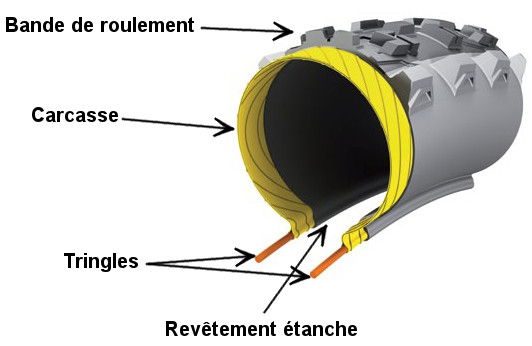
Michelin Wild Grip R tubeless mountain bike tyre.
A tubeless mountain bike tyre does not have an inner tube. On a conventional tyre, it is the inner tube that ensures the tyre is airtight. On a tubeless mountain bike wheel, this airtight seal is primarily provided by the specific profile of the rim, which has a groove that the beads of the tubeless mountain bike tyre fit into. The tyre's inflation valve is also sealed and specific to tubeless tyres. The tubeless tyre is made airtight by the addition of an extra layer of rubber on the inside. 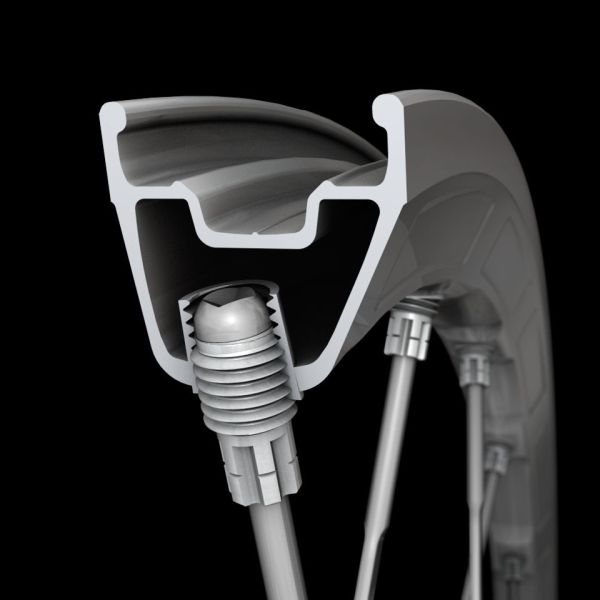
Mavic Fore system.
Tubeless mountain bike wheels also feature a double-wall construction. This means that the spoke thread is fixed to the first wall, leaving the second wall (which supports the tyre) free.is fixed to the first wall, leaving the second wall (which supports the tyre) free of holes through which air could escape. Mavic has further refined this device with the Fore system. Instead of using fixing eyelets for the spokes, these are screwed onto the wall, which increases rigidity by 20%. Thus, instead of being pierced, the metal is pushed inwards and then threaded so that the spokes can be screwed in.
Tubeless mountain bike tyres: dynamic advantages
<|gt;Tubeless MTB tyres offer numerous advantages. First and foremost, the risk of punctures is reduced. Obviously, there is no longer any risk of punctures caused by the inner tube being pinched by the air. Furthermore, with the use of a preventive sealant, small punctures are immediately sealed. However, it is possible to do without preventive sealant with tubeless MTB tyres if you want to optimise weight as much as possible. However, with 60 to 810 ml of liquid depending on the width of the tyre, the use of a preventive sealant adds only a minimal amount of weight. 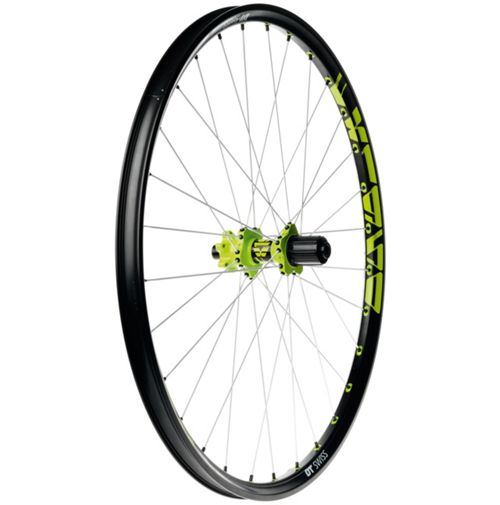
DT Swiss FX 1950 Tricon Tubeless MTB Wheel.
The dynamic advantages of tubeless mountain bike tyres are largely based on the elimination of the inner tube. Without it, the tyre becomes more flexible as there is noFurthermore, a tubeless MTB tyre requires 1 bar less pressure than a conventional tyre to stay on the wheel. This lower pressure also contributes to the flexibility of the tyre.This flexibility also contributes to comfort, with smoother rolling and better shock absorption. This flexibility also contributes to comfort, with smoother rolling and better shock absorption. In terms of safety, the Tubeless MTB tyre scores even more points, as there is no chance of the tyre coming off thanks to its very rigid attachment.
Tubeless mountain bike tyres: slight advantage in terms of weight
The advantage of a tubeless mountain bike tyre is less obvious when it comes to weight. By eliminating the inner tube, you can save between 100 and 200 g, depending on the grade of the inner tube. However, due to its design, a tubeless mountain bike tyre weighs more than a tyre with an inner tube. For example, the Michelin Wild Grip’R 26×2.10 Tubetype tyre weighs 520 g, compared to 720 g for the tubeless version! The weight saving is therefore relative, and you will need to opt for lighter MTB tubeless rims to benefit fromgreater lightness.
Tubeless Ready mountain bike tyres: the hybrid alternative
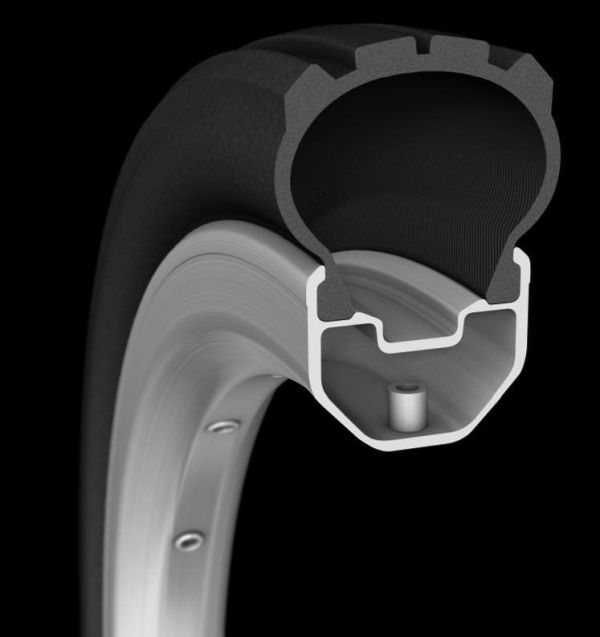
The Mavic UST tubeless mountain bike wheel system has become a benchmark.
The issue of weight has been taken into account by tyre manufacturers, who offer Tubeless Ready as a solution between Tubeless and Tubetype. There is still no inner tube, but Tubeless Ready mountain bike tyres do not have an inner seal. The use of a preventive liquid is therefore mandatory, as this is what ensures the airtightness of the tyre casing. However, with the absence of the internal sealing layer, the weight is greatly reduced!, the weight is significantly reduced! Furthermore, again due to the absence of a sealing coating, the flexibility of the tyre is further increased compared to a tubeless MTB tyre, benefiting traction and grip. In addition, Tubeless Ready MTB tyres are more affordable than tubeless tyres. However, it should be noted that Tubeless Ready tyres are less resistant to punctures than Tubeless tyres. On the other hand, they can be fitted with an inner tube if necessary.
Tubeless mountain bike tyres: difficult to fit
The main disadvantage of Tubeless and Tubeless Ready mountain bike tyres becomes apparent when they are fitted. These tyres must be fitted without tools to avoid damaging the rim and its tyre bead retention system. You will therefore need to usesoapy water to help the beads pass through the rim groove. Next, to secure the tyre to the rim, you will need to "pop" it (like a car tyre) by inflating it to a high pressure. This can be done with a powerful foot pump, although a compressor is recommended.|>
Comments
Thank you for your reply
Tyre fitted with preventive measure and compressor but no knocking!
After 45 km of riding, the tyre has not moved, so it must be in place. However, there is some leakage between the rim and the tyre, which will need to be checked on the next ride to see if the sealant is blocking it.|>
Hello, I installed tubeless ready tyres on tubeless ready rims
Everything is in place, but the tyres have never wanted to seal. Is this normal?|>
Hello
You need to use the preventive measure and a compressor to hear the tyre
It is also necessary to use the correct rim tape for sealing.
In some cases, you may nothear this noise. In any case, you should not experience any loss of pressure. Best regards|>
Do you have a question about this guide? Go to our contact form and select "Question about a guide". Don't forget to specify the name of the guide and/or its web address. Thank you.