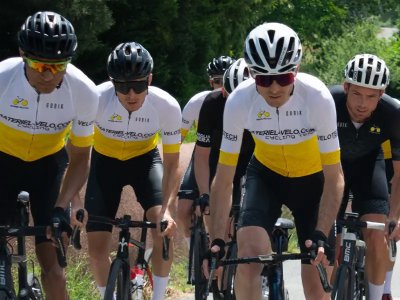
To approach a competition properly, you need to be well prepared.
Although training is the main part of preparation, there is one essential element that should not be overlooked: equipment.
Preparing your equipment properly means putting all the odds in your favour to avoid unfortunate mechanical incidents, but it also increases your mental capital. By taking special care in preparing your bike, you will increase your confidence in your equipment and, subconsciously, free yourself from the emotional stress associated with competition.
Choosing the right wheels for road racing
The choice of wheels before a competition is something that is sometimes overlooked.However, not all wheels are created equal, and not all wheels are suited to the different efforts you will have to make, nor to the different profiles you will be facing. Time trials Conquer the mountains If competition drives you beyond the peaks, all you have to do is lighten your load! Tyres or tubular tyres? While it is true that tyres today offer many advantages over tubulars while still providing good performance, there is no getting around it: for optimal performance, tubulars are truly the ideal solution. Suggestions TOP SEARCH CATEGORY TOP BRAND SEARCH TOP PRODUCT SEARCH Products
Between a flat race, a hilly or even mountainous profile, or a time trial, when it comes to wheels, it's best to know your stuff.<br'/> Let's start with the event where it seems most obvious to everyone that a strategic choice of wheels is essential: the time trial.|>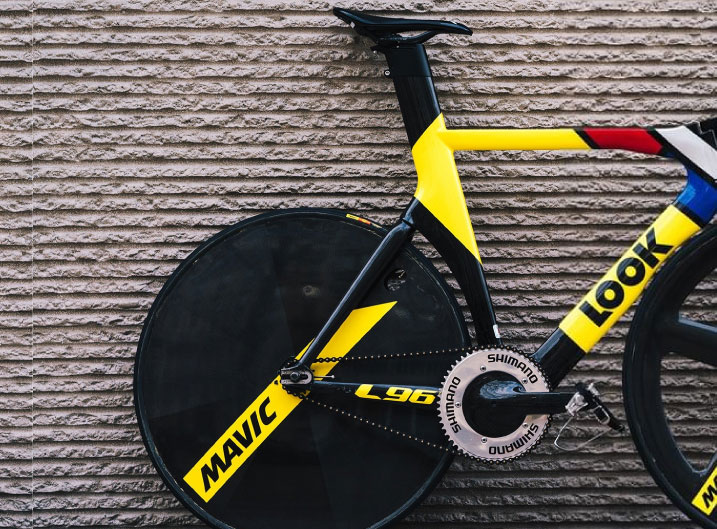 If there is one event where choosing the right wheels is as strategic as it is crucial, it is undoubtedly the time trial. Because the man/machine combination is undoubtedly the most important factor in this event, the equipment must be prepared with the utmost care.Before deciding to ride with a full wheel (or lenticular wheel) such as the Mavic Comète WTS, stick wheels or profiled wheels such as the Cosmic Carbon Boyau CXR80 MAVIC, let's review a few basic concepts.
Riding with a full wheel takes practice. Don't enter a time trial with a lenticular wheel without having done a series of training rides with this equipment. A solid wheel allows you to take advantage of the side wind to push yourself forward, just like a sail. However, it is essential to check the weather forecast so as not to set off on a route that is likely to be swept by strong gusts of wind. The solid wheel is mounted at the rear.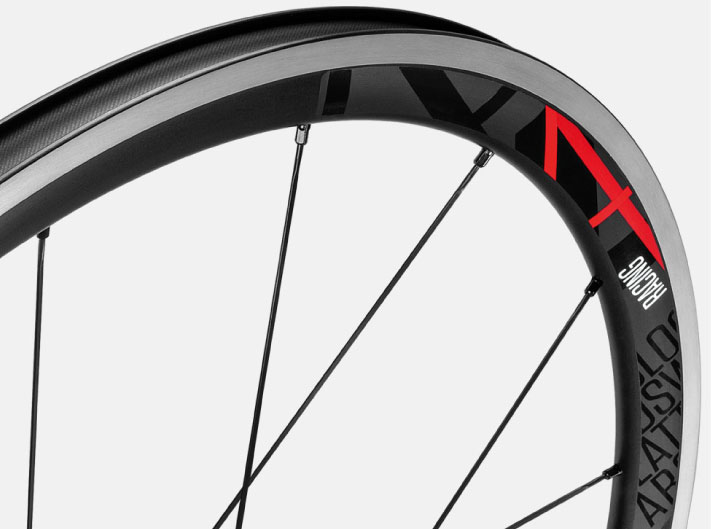 Riding with a solid front wheel is much more difficult because the wind will destabilise the bike, which can quickly become uncontrollable.
A profiled front wheel is therefore preferable, such as the Mavic Cosmic Carbon Tubular CXR80.
If you are racing on relatively flat terrain, keep in mind the aerodynamics of your wheels for better air penetration and reduced turbulence by reducing the number of spokes, such as the Shamal Ultra. it is wise to consider the inertia of the wheel and prioritise weight, not to make the wheel lighter, but quite the opposite: on flat terrain, the weight of the wheel is an advantage because, once launched, the weight will allow for greater wheel inertia; for example, the Fulcrum Racing 4 wheels with a 35mm profile.
However, be careful with the weather, because riding with carbon wheels, such as the Cosmic Carbone Ultimate WTS, for example, can be quite thrilling on rainy descents.
This is because carbon brakes are slightly less effective than aluminium or alloy wheels, such as the MAVIC R-sys SLR 2013.
But study the stage profile carefully, as these lighter wheels will be an advantage on climbs, but are less efficient on flat terrain. Carefully study the ratio of climbs to flat sections in the route profile to make the best choice.|>
And a "carbon-tubular" combination such as the Mavic Cosmic Carbon CXR80 Tubular, with its exceptional rigidity and ultra-light weight, is unlikely to leave you with any excuses on the road to victory. A little stiffness for performance.
The stiffness of your wheels (and your frame, for that matter) has an impact on performance. To put it simply, the performance of a wheel is directly proportional to its rigidity. This rigidity is relative to various factors: the materials, the volume, the geometry, etc.
It is possible to "play" with the stiffness of a wheel by adjusting the number of spokes and their tension. However, be careful not to over-tension the spokes, as this could cause them to break under the first significant stress on the structure of your machine. Determining the most suitable rigidity for each case could be the subject of an article in itself, as there are many factors to take into account (the cyclist's morphology, the rigidity of the frame, the weight/performance ratio, the objectives, etc.).
The choice of wheels is therefore an aspect that should not be overlooked when preparing your bike. These numerous factors must be taken into consideration in order to make the most appropriate choice for the situation.